Characteristics of the Mushaf Al-Qur'an Manuscript from the Toni Setiadi Collection in Bandung
Abstract
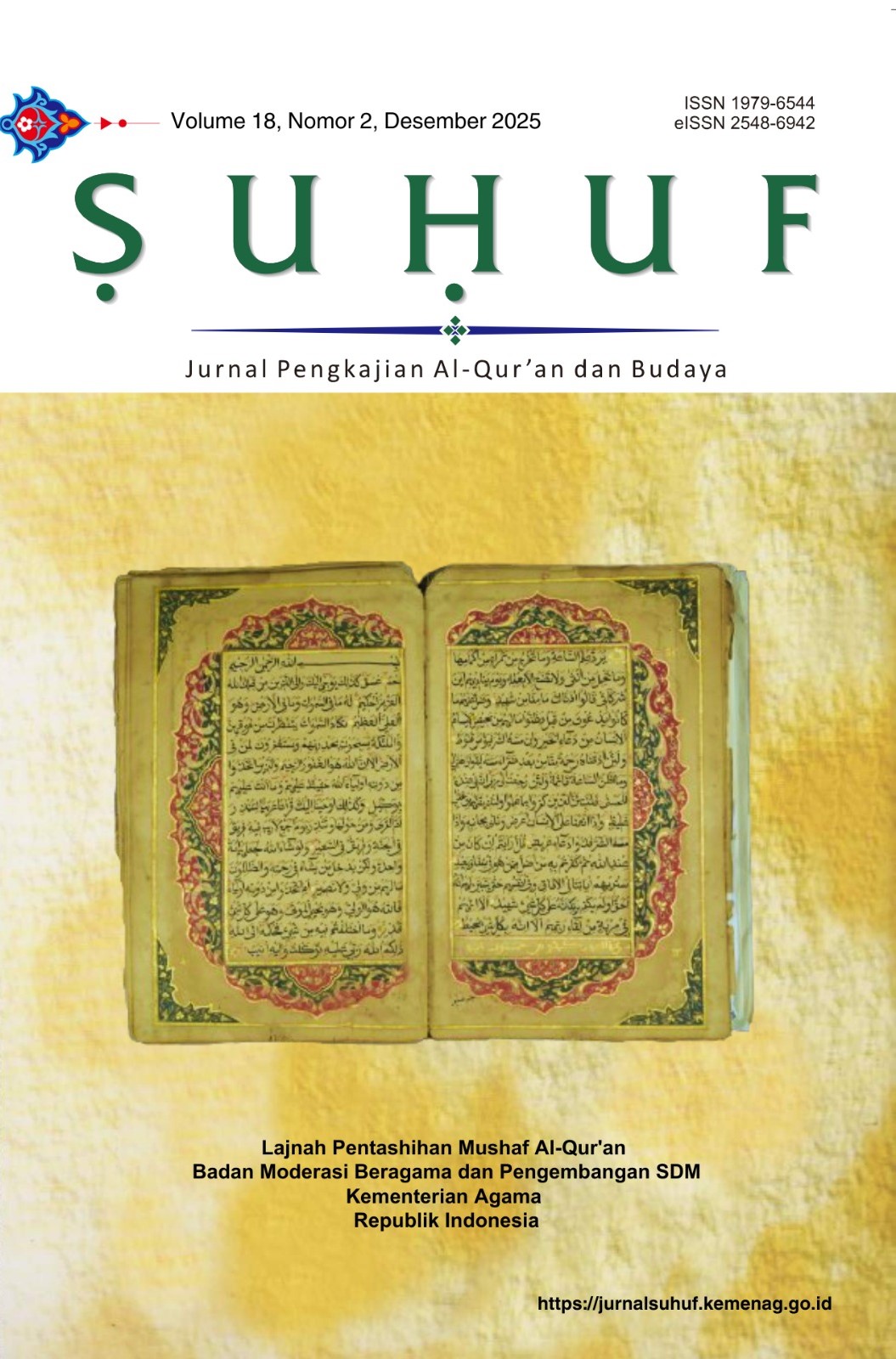
This study aims to examine the characteristics of the Toni Setiadi collection of mushaf manuscripts from Buahbatu, Bandung Regency, using a qualitative approach through descriptive-analytical methods. The formal object of this study is the application of codicology and textology, while the material object is the Al-Qur'an mushaf manuscript. The results of the study show that the Al-Qur'an manuscript was found in Ciamis and written on European paper with a lily-shaped watermark. The paper was produced in Gederland, Netherlands, in 1857. This manuscript measures 45 cm x 28.5 cm and consists of 358 pages, with each page containing 15 lines. The manuscript is written in Arabic using the naskhi script. It features beautiful floral illuminations and uses the Usmani style of writing. In addition, the manuscript also includes waqaf marks, tajwid, and symbols such as maqra, ruku, and sajdah verses. In terms of surah categorization, the structure of this manuscript is almost the same as the standard Indonesian mushaf. However, there are differences in five surahs. Based on research, it has been concluded that the Toni Setiadi collection manuscript was likely written in the late 19th or early 20th century, with the original owner coming from the upper-middle class.
Downloads
Copyright (c) 2025 Jauharah Khairun Nisa, Ilzam Hubby Dzikrillah Alfani, Ahmad Fairuz Dzikri

This work is licensed under a Creative Commons Attribution-ShareAlike 4.0 International License.

© Copyright CC BY-SA